Start with what the child can already do, then check the age range. A child who recognises the numbers 1 to 4 can try a 4x4 Sudoku, and chess puzzles suit a child who already plays a legal game. Our geography puzzle book is written for ages 8 to 12; our detective logic book is a separate title for teens and adults. The table below gives the age range and starting point for each book.
A note before the list. MindGrid Books publishes every book in this guide, and the guide covers only our own titles. We have not ranked them against other publishers' books. The details below come from the books themselves: puzzle counts, grid sizes, page counts and the age range we give each one.
Quick picks by age
| Age | If they like | Book | What is inside |
|---|---|---|---|
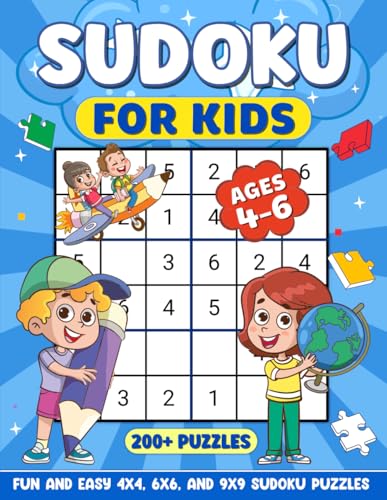
| 4 to 6 | numbers and matching | Sudoku for Kids 4-6 | about 200 puzzles, starting on 4x4 grids |
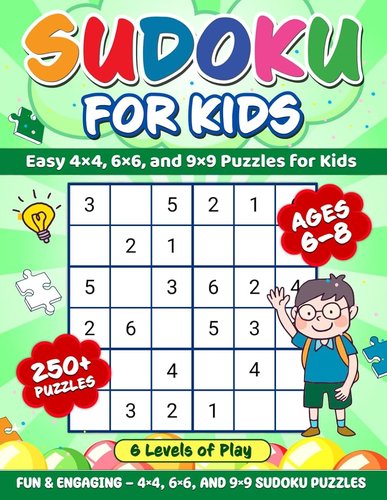
| 6 to 8 | a first puzzle book | Sudoku for Kids Ages 6-8 | 250+ puzzles in six levels, easy and medium only |
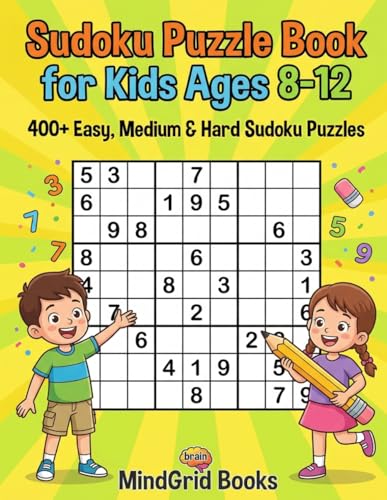
| 8 to 12 | numbers | Sudoku for Kids Ages 8-12 | 400+ puzzles, 234 of them full-size 9x9 |
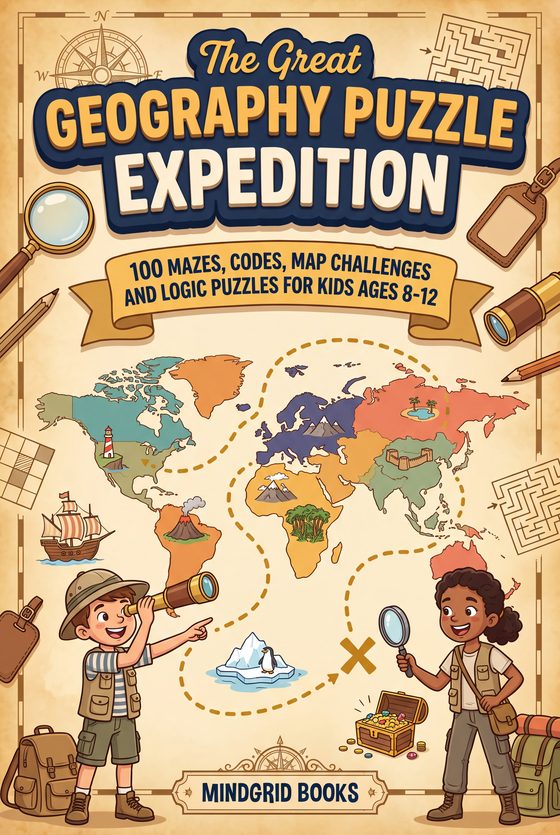
| 8 to 12 | maps and places | The Great Geography Puzzle Expedition | 100 puzzles in ten stages, a hint and an explained answer for each |
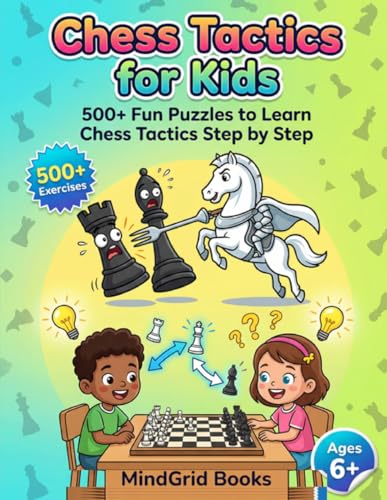
| Once they know the moves | chess | Chess Tactics for Kids | 504 puzzles from real games, six diagrams to a page |
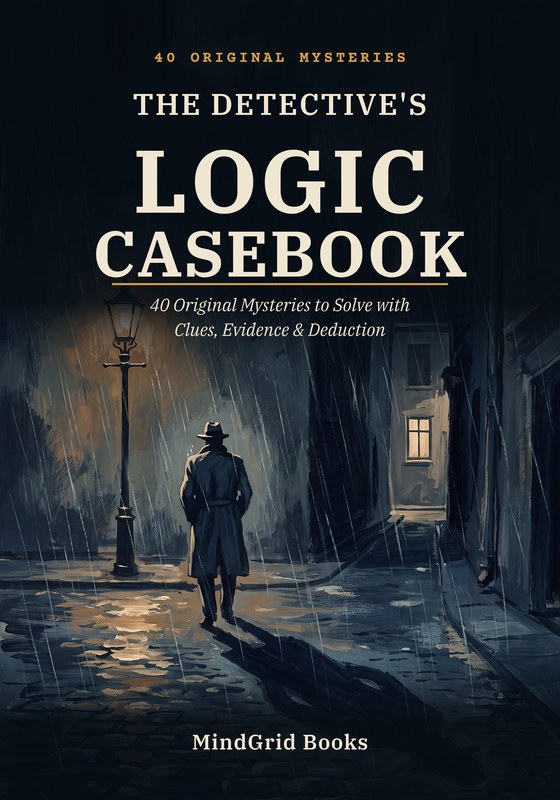
| Teens | mysteries | The Detective's Logic Casebook | 40 cases in four levels, with three hints each |
Ages 4 to 6: a first Sudoku book
Sudoku for Kids 4-6 has around 200 number puzzles. It opens on 4x4 grids, which use only the numbers 1 to 4, then moves to 6x6 and finally to full 9x9 grids. The difficulty rises gradually inside each section, the solutions are in the back, numbered to match, and the pages are a large 8.5 x 11 inches.
Two things to know before you wrap it. These are number puzzles, not picture puzzles, so the child needs to recognise digits: 1 to 4 for the first section, 1 to 9 by the end. And a four-year-old will want an adult beside them for the first few grids. Our guide to when a child is ready for a first Sudoku goes through the signs.
Ages 6 to 8: Sudoku that grows with them
Sudoku for Kids Ages 6-8 has 250+ puzzles in 4x4, 6x6 and 9x9 grids, arranged in six levels. It is easy and medium throughout, with no hard section. The book is meant to be worked through in order, and the answer key at the back lets a child check their own work.
If you do not know the child's level, or the book will be shared in a family, the Sudoku Puzzle Book for Kids covers a wider range: 336 puzzles, with 120 4x4, 108 6x6 and 108 9x9 grids, each size running from easy to hard, in 73 pages.
Our four children's Sudoku books side by side
| Book | Puzzles | Grid sizes | A good fit for |
|---|---|---|---|
| Sudoku for Kids 4-6 | about 200 | 4x4, 6x6, 9x9 | first puzzles, with an adult nearby |
| Sudoku for Kids Ages 6-8 | 250+, easy and medium | 4x4, 6x6, 9x9 | working through in order |
| Sudoku Puzzle Book for Kids | 336 | 120 4x4, 108 6x6, 108 9x9 | an unknown level, or several children |
| Sudoku for Kids Ages 8-12 | 400+ | 60 4x4, 108 6x6, 234 9x9 | a child who has outgrown a beginner book |
Easy, medium and hard are the books' own section names. How hard a puzzle feels depends on the child, and the bigger step is usually the grid size, not the label. All our Sudoku books, for adults as well as children, are compared on one page.
Ages 8 to 12: pick by what they enjoy
From eight, our books go beyond Sudoku into geography and chess, so the subject a child enjoys matters as much as the age.
For a child who likes numbers
Sudoku for Kids Ages 8-12 is built around the full-size grid: 234 of its 400+ puzzles are 9x9, the same grid adults solve, with 108 6x6 and 60 4x4 puzzles as warm-ups. Each grid size runs from its easy section to its hard one, across 109 pages. It is the one to choose when a child has finished a beginner Sudoku book and found it too easy. If a full 9x9 grid is too big a step, the ages 6-8 edition is the gentler choice.
For a child who likes maps and places
The Great Geography Puzzle Expedition has 100 original puzzles in ten stages, travelling from North America to Antarctica. Every puzzle is set in a real place, and the facts it needs are printed on the page, so it suits a child who likes a challenge more than one who already knows a lot of geography.
The book mixes eight puzzle types. Two examples of what a child actually does:
- Code breakers: work out a shift-code key, then decode a message about a real place.
- Mazes: find a route across a region while obeying a geography rule, such as avoiding every place below a certain height.
There are 40 easy, 40 medium and 20 challenging puzzles, with all three levels in every stage. Each puzzle has a hint and a full explained answer, and a pencil is the only equipment. The 184 pages are 8.5 x 11 inches, printed in black and white.
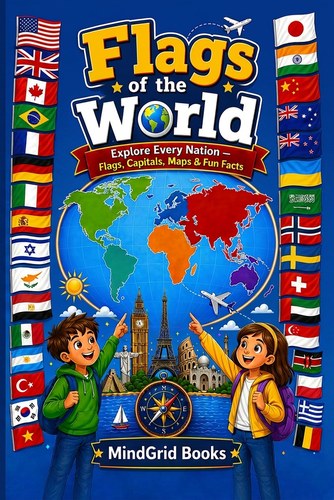
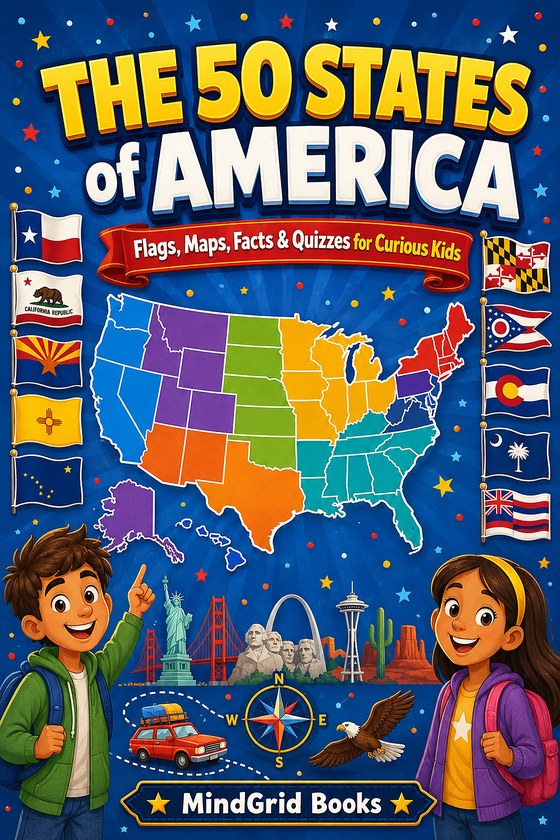
To go with it, Flags of the World is a full-colour reference book rather than a puzzle book: all 193 UN member countries, one per page, with the flag, capital, a locator map and a fun fact. For American geography, The 50 States of America gives every state a full-colour page and closes each of its eight regions with a quiz and an answer key. Our geography titles for ages 6 to 12 are all on one page.
For a child who plays chess
Chess Tactics for Kids has 504 puzzles, all taken from real games, with six large diagrams to a page. It is arranged in three rated sections (under 1200, then 1200 to 1500, then 1500 to 1800) and opens with 155 one-move puzzles, including 72 mate-in-one. No puzzle is more than two moves deep, and full solutions are at the back in algebraic notation.
The book teaches tactics, not the rules. A child should already know how every piece moves and what checkmate means. Our article on the right age for chess puzzles describes what suits children from 5 to 11 and over.
Teens: logic mysteries and bigger puzzle books
The Detective's Logic Casebook is written for adults and teens, not young children. It has 40 original mysteries, each with a story, a list of suspects, numbered evidence and a logic grid. The cases climb in four levels: a beginner case has 3 suspects and 5 or 6 clues, a master case has 5 suspects and 15 to 17. Every case has three hints, from a gentle nudge to the deciding clues, and a step-by-step solution. It runs to 265 pages at 7 x 10 inches. A teen who has never used a logic grid can start with our worked logic grid example.
A teen who has outgrown the children's chess layout can move to 1000+ Chess Puzzles for Beginners: 1,008 puzzles rated from 400 to 1497, with twelve smaller diagrams to a page. For Sudoku, the adult books continue where Sudoku for Kids Ages 8-12 stops.
How to choose by ability, not only age
Age ranges on puzzle books are a starting point. What the child can already do is a better guide.
| If the child | Start with |
|---|---|
| knows the numbers but has never tried Sudoku | a book that opens on 4x4 grids: the 4-6 or 6-8 edition |
| finishes a 4x4 quickly and asks for another | a book with plenty of 6x6 and 9x9 grids |
| has finished a beginner Sudoku book | Sudoku for Kids Ages 8-12 |
| is 8 to 12 and likes maps, codes and mazes | The Great Geography Puzzle Expedition (ages 8 to 12) |
| knows how every chess piece moves | Chess Tactics for Kids |
| is a teen who enjoys mysteries | The Detective's Logic Casebook (teens and adults) |
When you are unsure, choose the book that starts lower. A child who finds the first pages easy moves on quickly. A child who is stuck on the first page may put the book away.
Try a free puzzle before you buy
If you are not sure a child will take to a kind of puzzle, try one first. These pages are free and need no signup:
- three 4x4 Sudoku practice puzzles with a worked example and answers
- ten beginner chess puzzles to print, each answer explained in words
- five geography brain teasers for ages 8 to 12, which can be read aloud
Planning a school break rather than a present? Our four-day screen-free holiday plan fits these free activities and a few family games into a few days.
Before you wrap it: a short checklist
- Check the skill, not only the age. Can the child read the digits, the clues, or the chess board the book assumes?
- Puzzle book or reference book? The Sudoku books, the Geography Puzzle Expedition, Chess Tactics for Kids and the Casebook are puzzle books, and each includes its answers or solutions. Flags of the World is a reference book to read and look things up in. The 50 States of America is an atlas that closes each region with a quiz and an answer key.
- A pencil for the write-in books. The Sudoku books, the Expedition and the Casebook's logic grids are filled in on the page, so a pencil and an eraser go well with them. The reference book and the atlas need neither.
- Mind the size. Most of these books are large 8.5 x 11 inch paperbacks. Flags of the World is 6 x 9 and the Casebook is 7 x 10.
- Colour or black and white. Flags of the World and The 50 States of America are full colour. The Geography Puzzle Expedition is printed in black and white, with room to write.
- Look for a free extra. The Expedition, Flags of the World, The 50 States of America and the Casebook each come with a free printable bonus, described on the book's page.